How to Set Up Your Storage for Faster and Smoother Video Editing
Want a faster video editing workflow? Learn the best storage setup for video editing, including where to store media files, cache, and project files for optimal performance in Premiere Pro and other editing software.
TLDR: The fastest Premiere Pro storage setup uses a dedicated NVMe SSD for the cache and media cache files, a separate fast drive for project files and proxies, and an external drive for long-term archive, keeping the system drive clear of all media.
Optimizing your workflow by properly configuring external drives and storage can significantly enhance Premiere Pro’s speed and efficiency when you’re a video editor working with high-resolution footage.
Knowing where to store your media, cache, and project files is one of the basics to have in order to maximize performance and minimize lag.
Why External Drives Matter for Premiere Pro Performance
Video editing often requires handling large video and audio files, cache data, and project backups. Using external SSD or NVMe drives can help offload the workload from your internal drive, preventing obstacles and ensuring a smooth workflow. Below are the best practices for configuring external storage for optimal performance in Premiere Pro.
Best Storage Configuration for Premiere Pro
1. Media Cache Drive: Use a Fast SSD or NVMe Drive
Purpose: Stores temporary cache files that Premiere Pro generates while editing.
Recommended Drive Type: NVMe SSD or high-speed external SSD (e.g., Samsung 990 Pro, SanDisk Extreme SSD).
Why? Faster drives allow quick retrieval of cached files, reducing playback lag and rendering times.
Setup: In Premiere Pro, go to Preferences > Media Cache and set the cache location to your fastest external SSD.
2. Media Drive: Large Capacity Drive with Fast Read Speeds
Purpose: Stores raw footage and media files.
Recommended Drive Type: High-speed external SSD or RAID system.
Why? Large files need sufficient read speed for smooth playback, especially for 4K and higher resolutions.
Setup: Store all project media files here, and ensure the drive has at least a 500MB/s read speed for 4K video.
3. Project & Auto-Save Drive: External SSD or Cloud Backup
Purpose: Saves project files, autosaves, and backups.
Recommended Drive Type: External SSD or cloud backup (Google Drive, Dropbox, or NAS storage).
Why? Keeping project files separate from media prevents data loss and ensures stability.
Setup: Set Auto Save preferences in Premiere Pro to store backups here.
Additional Optimization Tips
Enable GPU Acceleration: Go to File > Project Settings > General and set [Renderer] to [Mercury Playback Engine GPU Acceleration].
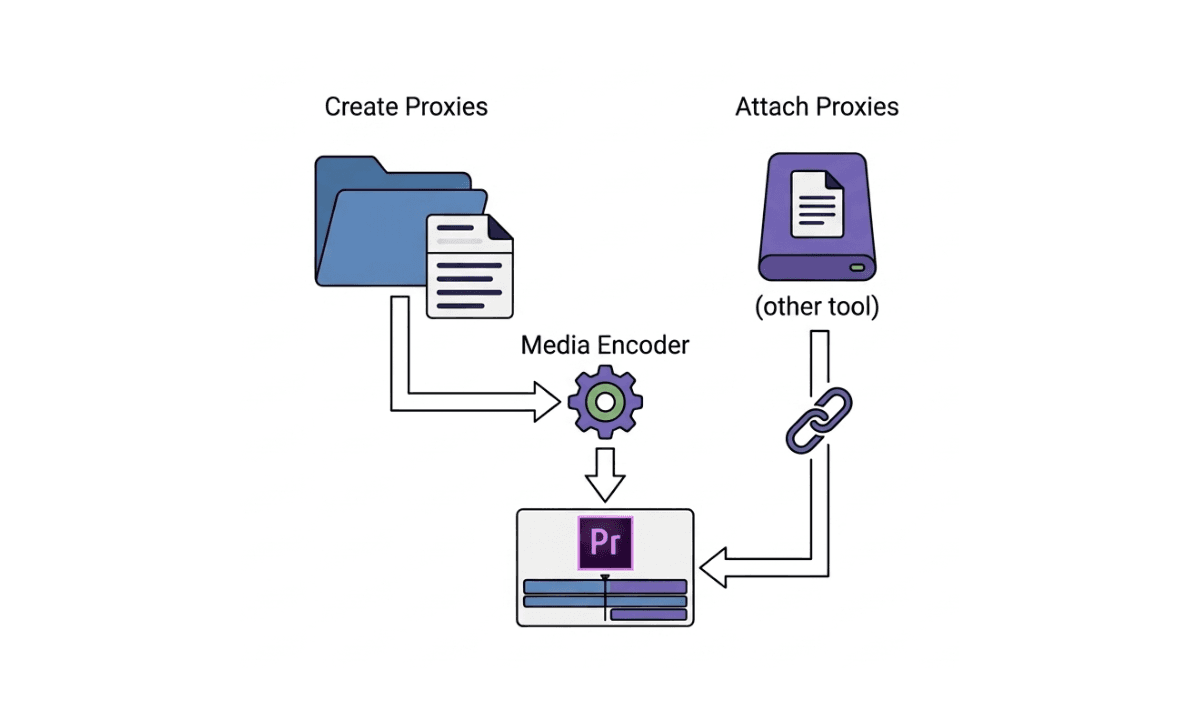
Use Proxies for High-Resolution Footage: Generate lower-resolution proxies to speed up playback.
Keep External Drives Organized: Use a structured folder system (e.g., Project Folder > Footage, Audio, Cache, Exports).
Ensure Sufficient Drive Space: Keep at least 20% of your external drive free for smooth operation.
By using a combination of high-speed SSDs for cache and media files, and a reliable backup system for project files, you can easily increase Premiere Pro’s efficiency easily. Whether you’re editing 4K footage or working with multiple clips, following these best practices will ensure an optimized and productive workflow.
Read detailed video editing hardware requirements in our comprehensive guide.
For more Premiere Pro editing tips and tricks, explore our latest content on the Cutback blog or Cutback’s official YouTube channel.
Frequently Asked Questions (FAQs)
Q: How much storage do I need for Premiere Pro?
A: For a functional Premiere Pro setup, you need at minimum 50GB free on your system drive for the application itself, plus dedicated storage for media, cache, and project files. A practical minimum for active project work is 1TB total, 500GB for raw footage and media, 256GB or more for the cache drive, and the remainder for project files and exports. For 4K workflows or anyone editing multiple projects simultaneously, 2TB+ across two drives (one fast NVMe SSD for cache, one larger drive for media) is the recommended starting point. Storage runs out faster than most editors expect once 4K footage, proxies, and cache files accumulate.
Q: How many GB does Premiere Pro 2026 take up?
A: Premiere Pro's application installation is approximately 8-10 GB. However, the application size is almost irrelevant compared to what Premiere Pro generates during use, the media cache alone can grow to 50-100 GB or more on active projects if not regularly cleared. Add raw footage, proxy files, and auto-save backups and a single project can consume several hundred gigabytes. Keep at least 20% of any drive Premiere Pro writes to free, Premiere's performance degrades noticeably when drives approach capacity.
Q: What is the best storage setup for Premiere Pro?
A: The fastest setup uses three separate storage locations: a dedicated NVMe SSD for the Premiere Pro media cache (set this in Preferences > Media Cache), a second fast drive (external SSD, minimum 500 MB/s read speed) for raw footage and project files, and a third drive or cloud backup for long-term archive. Keeping the cache off your system drive and on its own fast SSD is the single highest-impact storage change you can make, it reduces playback lag, speeds up rendering, and keeps your system drive from filling up during heavy editing sessions.
Q: How much storage do I need for 4K video editing?
A: 4K footage is storage-intensive, approximately 50-100 GB per hour of footage at typical camera bitrates, and significantly more with professional codecs like ProRes or RAW. For editing 4K in Premiere Pro, plan for at minimum 2TB of active storage: enough to hold several hours of raw footage, the proxy files (which add 20-50 GB per hour at proxy quality), cache files, and project files simultaneously. For ongoing 4K production, a RAID system or fast NAS with 4TB or more is the standard professional setup.
Q: Is 32GB RAM enough for Premiere Pro?
A: 32GB RAM is Adobe's recommended specification for 4K editing in Premiere Pro and handles most professional workflows well. For 1080p single-track editing, 16GB is the practical minimum. For complex 4K multicam, heavy effects stacks, or running Premiere Pro alongside After Effects simultaneously, 64GB becomes useful. RAM is not the same as storage. RAM affects how smoothly Premiere Pro runs in real time, while storage determines how much footage you can keep and how fast the cache files load. For a full breakdown of Premiere Pro RAM and hardware requirements, the Premiere Pro system requirements guide covers the complete spec picture.
Q: Where should I store my Premiere Pro media cache?
A: The media cache should always be stored on your fastest available drive, ideally a dedicated NVMe SSD separate from both your system drive and your media drive. Go to Preferences > Media Cache in Premiere Pro and set the cache location to that drive. Storing the cache on the same drive as your operating system causes competition for read/write bandwidth during playback and editing. Storing it on the same drive as your footage means heavy cache writes are competing with footage reads simultaneously. A dedicated fast drive eliminates both bottlenecks. Clear the cache regularly (Preferences > Media Cache > Delete) to prevent it from growing to 100GB or more on long projects.
Q: How do I free up storage space in Premiere Pro?
A: The fastest way to recover disk space is to clear the Premiere Pro media cache (Preferences > Media Cache > Delete unused media cache files). On active projects this can recover 10-50 GB or more. After that: delete unused preview files (Sequence > Delete Render Files), remove duplicate project versions from the auto-save folder (keeping only the most recent 5-10), and archive completed project folders to an external drive. For ongoing space management, set your auto-save to a maximum of 20 versions rather than the default unlimited, and redirect the cache to a dedicated drive so it does not silently consume your system drive.

Kay Sesoko
Marketer
Share post