AI Video Editing: Pros and Cons
Discover the pros and cons of AI video editing in this comprehensive guide. Learn how AI can dramatically reduce editing time, make video production accessible to all, and offer data-driven insights. However, explore potential downsides, including creativity concerns and job loss risks for editors. Find out why AI is a game-changer but not yet a full replacement for human editors.
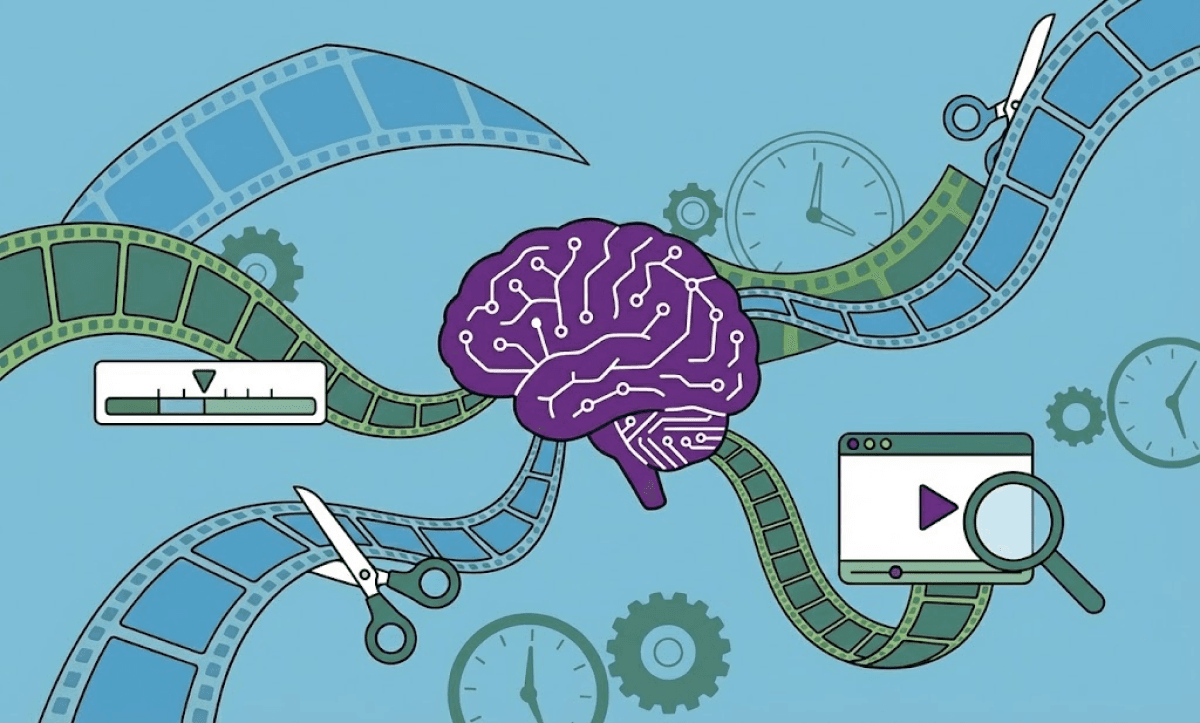
TLDR: AI video editing speeds up mechanical tasks like silence removal, transcription, and rough cut assembly significantly, but still requires human judgement for pacing, narrative decisions, and anything requiring creative context.
Hello! In the last post, we explored the futuristic concept of AI video editing.
The AI scene in terms of video editing is constantly evolving, which we have seen recently in the evolution of trends like video vibe editing, too.
Let's take a look at the advantage and disadvantage of such trends and the use of AI in video editing in general.
Advantages of AI Video Editing
Advantage 1: Significant Reduction in Editing Time
The most significant advantage of AI video editing is the dramatic reduction in editing time. Editing a video over an hour long, including cutting scenes and adding subtitles, can be incredibly time-consuming when done manually. But if AI can handle this automatically in just a few minutes? The time-saving effect is remarkable. This means even the work hours of editors who spend all day working on editing software can be greatly optimized. One example of this is Premiere Assistant's Auto Rough Cut feature, for instance.
Advantage 2: Easy Production of Various Types of Videos
AI video editing allows for the effortless creation of various types of videos, including advertisements, promotional videos, educational content, news, and social media videos. One of the greatest strengths of AI is that anyone can produce videos easily without needing specialized video editing skills. It’s so accessible that even someone like me, without any professional knowledge, might start reconsidering an old dream of becoming a YouTuber.
Advantage 3: Data-Driven Analysis and Improvement
AI operates based on thousands and even millions of data points. AI video editing can analyze accumulated viewer data to create videos tailored to viewers' preferences. You can also produce personalized videos based on individual characteristics and interests, as well as effective marketing videos for advertisers.
Advantage 4: Unlimited Potential for Development
As technology continues to advance, AI technology will also rapidly improve. Platforms like VEED's AI video editor already make it easier to create videos using simple prompts and automated editing. New features and effects that don’t exist today will be added, and AI holds the infinite potential to completely transform the way videos are produced in the future.
Disadvantages of AI Video Editing
Disadvantage 1: AI Can Make Mistakes
Although technology has advanced, AI hasn’t yet surpassed humans in every field. The same applies to video editing. There are still cases where AI-generated videos don’t match the quality of human-created content. For example, there might be small errors like incorrect spelling, spacing issues, or unnatural context, making it premature to rely on AI entirely. Even with identical inputs, AI might produce different outputs.
Disadvantage 2: Potential Job Losses for Editors
Currently, AI is a user-friendly tool that helps editors reduce editing time, allowing them to produce more videos. However, as AI technology continues to evolve rapidly, there’s a possibility that it could eventually replace editors' jobs.
Disadvantage 3: Concerns Over Lack of Creativity
While AI makes the editing process more straightforward, it may also result in a lack of creativity in the final video. As mentioned earlier, AI works based on learned data. If an AI with insufficient learning edits a video, the result could be a monotonous production with no reflection of the editor’s individuality or intent.
Conclusion: AI Offers Significant Help but Is Not Yet Perfect
After reviewing the advantages and disadvantages of AI video editing, it seems that AI is not yet advanced enough to replace editors' jobs. In fact, it could be a great opportunity for editors right now. By utilizing AI, video editors can complete more work than before and offload tedious, stressful tasks to machines.
For instance, using plugins like Premiere Assistant in Premiere Pro allows AI to handle tasks such as subtitling and cutting scenes, significantly improving efficiency.
It seems that effectively using AI as a supplementary tool to reduce work time could be an essential competitive edge for editors. Therefore, I recommend keeping an open mind and experimenting with various AI programs.
Frequently Asked Questions (FAQs)
Q: What are the main advantages of AI video editing?
A: The most significant advantages are speed and accessibility. AI tools can reduce hours of mechanical work, silence removal, transcription, rough cut assembly, and caption generation to minutes, freeing editors to focus on creative decisions. AI also makes video production accessible to people without formal editing training and enables data-driven workflows like parallel variant rendering for different platforms.
Q: What are the disadvantages of AI video editing?
A: AI video editing still produces errors that require human review, incorrect cuts, unnatural context, and inconsistent outputs, even with identical inputs. It lacks the creative judgment to make narrative decisions, and over-reliance on AI-generated structure can produce technically correct but creatively flat results. There is also a legitimate concern that editors who do primarily mechanical work without upskilling risk being displaced as the technology matures.
Q: Can AI video editing tools make mistakes?
A: Yes. AI editing tools can misidentify intentional pauses as silence to remove, cut mid-sentence, hallucinate timestamps, or apply captions inaccurately on non-English audio. The error rate varies significantly by tool; tools like Selects that read the audio waveform directly at 10 ms precision produce far fewer frame-level errors than tools that rely solely on transcript text for cut decisions. Human review of AI-generated rough cuts remains essential before final delivery.
Q: Is AI video editing worth it for professional editors?
A: For any editor regularly cutting long-form content, interviews, podcasts, and talking-head videos, AI editing tools deliver a clear return. Silence removal, multicam sync, and rough cut generation alone can recover several hours per project. The question is not whether AI is worth it, but which layer of the workflow to automate first. Tools like Premiere Assistant handle this inside Premiere Pro; Selects handles it upstream before the footage reaches the NLE.
Q: Does AI video editing reduce creativity?
A: AI reduces the time spent on mechanical tasks, not creative ones, but this distinction matters in practice. If an editor delegates narrative structure to AI without critically reviewing the output, the result will reflect the AI's pattern-matching rather than a considered editorial perspective. The editors who get the best results use AI to generate a starting point and apply their own creative judgement from there, not to replace the judgement itself.
Q: What kinds of videos benefit most from AI video editing?
A: Long-form content with high volumes of speech, interviews, podcasts, documentaries, talking-head videos, and educational content benefits most from AI video editing. These formats involve large amounts of raw footage, repetitive mechanical prep work, and predictable structure that AI handles well. Short-form creative content with complex visual storytelling typically benefits less, since the value is in the creative decisions rather than the mechanical prep.

Tom Kim
CEO and Co-founder
Share post