How To Automatically Create Podcast Clips for Instagram & TikTok Using AI Tools
Learn how to use AI podcast clip makers like Premiere Assistant to automatically generate social-ready videos for Instagram and TikTok. Fast, engaging, and optimized for virality.
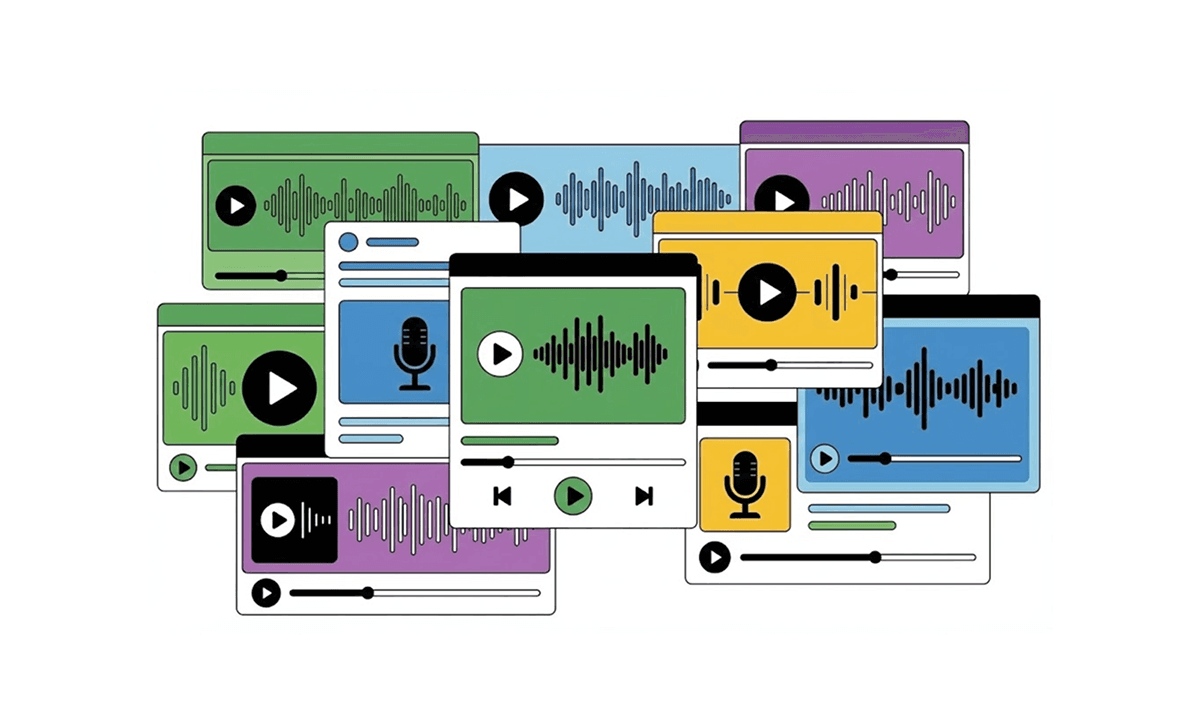
TLDR: The fastest way to repurpose podcast clips for Instagram and TikTok is to use Selects to identify the strongest segments by topic or keyword, export them at 9:16 with captions already applied, and schedule them within the same day as the long-form upload.
You already did the hard part: recording and publishing your podcast. But if you’re only uploading and logging off after you publish the entire episode, you’re leaving way too much potential on the table.
Every episode is packed with moments that could catch fire on Instagram Reels, TikTok, or YouTube Shorts; you just need a system to pull them out. The trick? Automate the tedious bits, stay consistent, and focus on the kind of clips people actually want to watch.
This guide breaks down the fastest way to turn long-form podcast content into short-form video clips that get seen, shared, and rewatched so that you can leverage existing content.
Make sure to check out our complete podcast editing guide, as well.
If your footage isn't edit yet, Selects handles the pre-edit stage (sync, transcription, and rough cut assembly) before any repurposing tool can run.
Why Repurposing Podcasts as Short-Form Video Works
Social media is short-form territory now. Podcasts are long-form goldmines.
By bridging the two, you get:
Increased discoverability across platforms
Short video snippets that lengthen the shelf life of your content
Better audience retention with visual storytelling
You can generally increase distribution and boost your podcast analytics by showing off your video editing capabilities to even more people.
Short clips offer quick value, and they’re algorithm-friendly. All those bold takes, surprising facts, and laugh-out-loud moments you capture? A lot of them were also made to be watched in 30 seconds or less.
Manual Repurposing Is the Bottleneck
Clipping out podcast highlights manually seems easy until you try it.
You're scrubbing through long recordings, trimming, resizing, styling captions, and figuring out what will actually land on social. It’s a huge time sink. Especially if you’re editing alone.
Plus, not every great moment makes sense without context. Knowing what will work takes judgment, and editing it down takes patience.
That’s why so many creators give up or fall off schedule.
Content Repurposing Tools: Let AI Handle the Tedious Bits
Tools like Premiere Assistant, Descript, or Opus Clip are changing the game. Instead of hunting for clips manually, you can:
Auto-transcribe your audio for text-based editing
Automatically generate a rough cut from your full episode
Highlight emotional moments or strong takes using AI
Generate captions with accurate timing
Format vertically and add social-ready framing (Premiere Assistant even offers viral title recommendations
The best part? Once you set up your workflow, it scales. One episode can easily become 5–10 strong video clips. Some plugins and video editing tools might even allow you to create unlimited clips as they let you auto create horizontal, vertical, and square videos in a click of a button.
What Makes a Good Podcast Clip for TikTok, Reels, or Shorts?
You only have a few seconds to hook someone. The best clips:
Open with a surprising quote or question
Are emotionally charged or opinionated
Deliver value or insight immediately
Stand alone without too much setup
Pro Tip: If you’re editing the traditional way, mark these moments while you record or review. If it made you laugh, gasp, or rewind, it’s probably clip-worthy.
Podcast Social Media Posts Examples
One essential aspect that will help you create viral repurposed social media posts is benchmarking podcast social media post examples. For instance, one prime example of visual assets that have been done well to grow podcast reach is from the Alex Hormozi channel.
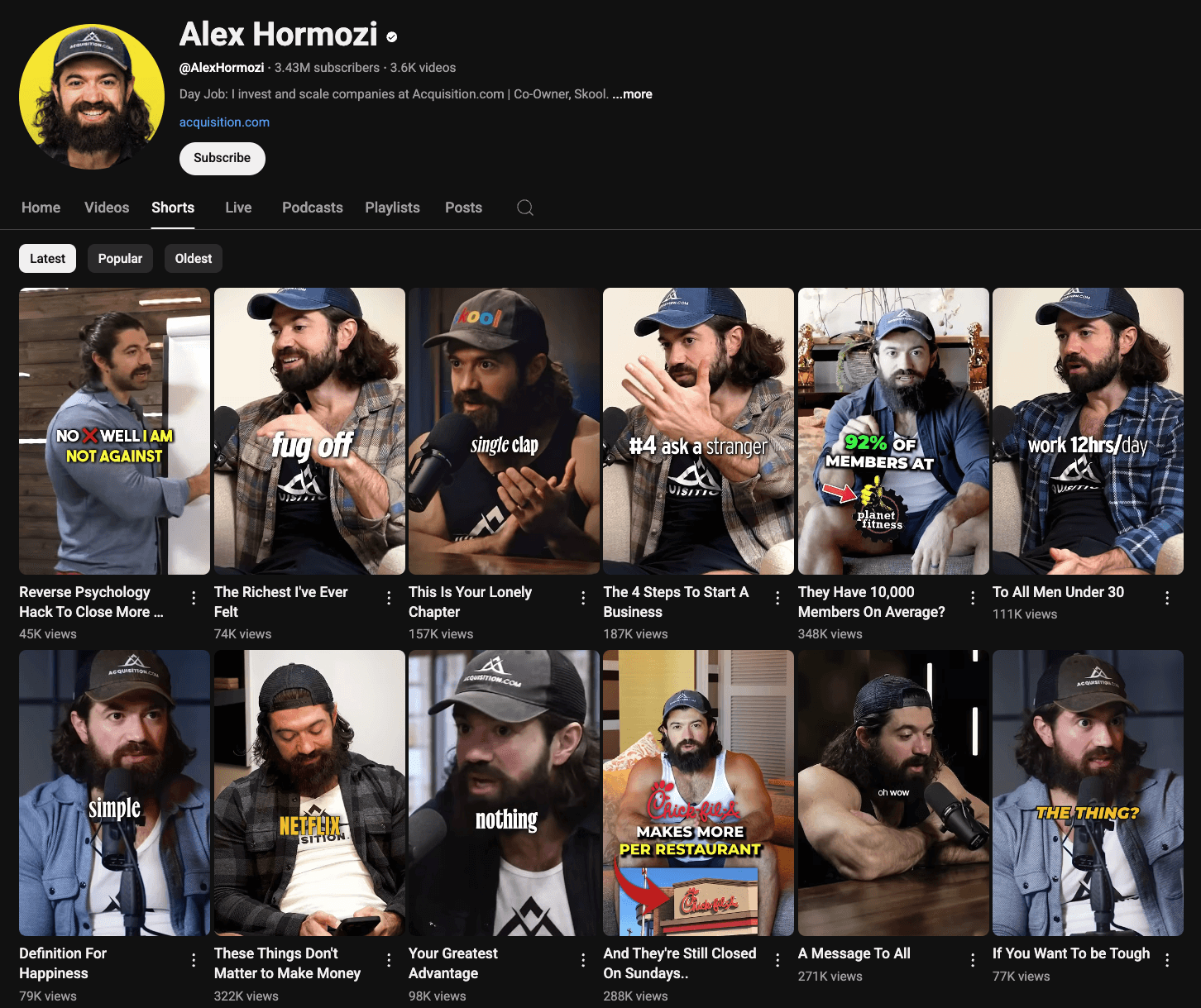
Alex Hormozi repurposes the top-performing episodes from his podcast, and the visuals go through an editing process with new subtitles that make them ready for distribution on various social media platforms. This is an excellent example of how to convert podcast episodes into short-form videos.
Step-by-Step: How To Repurpose Podcast Content
1. Transcribe Your Episode
Start by getting a transcript. This helps you:
Search for keywords
Spot quotable sections quickly
Build captions later on
Premiere Assistant, Descript, and Riverside all include transcription features.
2. Find Your “Scroll-Stopping” Moments
These might be:
A spicy hot take
A guest reaction
A mic-drop insight
A funny story
Use AI tools to identify high-energy moments or tag them during your edit manually.
3. Clip and Caption Automatically
Choose your moment. Let the tool create a vertical crop, then:
Auto-add captions (with a clear headline-style hook)
Center the speaker’s face
Keep it punchy (under 60 seconds is ideal)
Premiere Assistant's AI Rough Cut and Chat UI can help you do all of this just by describing the clip you want. Example: “Make a 30-second viral clip where the guest explains the shocking stat about burnout.”
4. Format for Mobile (9:16)
Always export for vertical screens. That means 1080x1920 or 720x1280 resolution.
Overlay captions near the center. Keep logos or branding in the corners. Don’t crowd the frame.
5. Add a CTA That Doesn’t Suck
“Watch the full episode” is vague. Be specific.
Try:
“Hear the full story behind this insane stat.”
“The guest’s full breakdown is even wilder. Watch the full pod.”
Make your CTA visual, short, and punchy.
Weekly Podcast Repurposing Workflow for Podcasters Who Don’t Want to Burn Out
Batching saves lives. Here’s how to make this process repeatable:
Step 1: Record and import your episode into your video editing tool of choice.
Step 2: Auto-generate your transcript and rough cut.
Step 3: Create 3–5 short clips from marked moments.
Step 4: Add necessary captions and export all your clips.
Step 5: Use a tool like Buffer, Repurpose.io, or Later to schedule them throughout the week and let them auto-publish. If you schedule directly on the social media platform, that might become a hurdle that leads to burnout in the future.
Step 6: Repost your best-performing clip to YouTube Shorts, Instagram Reels, and TikTok.
That’s it. One episode = a week’s worth of content. You can read a step-by-step strategy on how to turn one long video into a week's worth of content in our feature article.
Final Thoughts
Repurposing your podcast into short-form content is no longer a “nice to have.” It’s how you grow.
Instead of watching your episodes fade after one post, this system gives them a second (and third) life. Use AI to handle the busywork. Show up more consistently. And build reach without burning out.
Every scroll-stopping clip you post is a door into your world. Make it count.
For more in-depth knowledge about the ins and outs of video editing, check out our latest posts on the Cutback blog or our YouTube channel.
FAQs (Frequently Asked Questions)
Q: How do you repurpose podcast content for social media?
A: The most efficient system is three steps: identify, clip, and format. Use Selects to search your episode transcript by keyword or topic to surface the strongest moments without scrubbing the full recording. Export each segment at 9:16 for vertical platforms with captions already applied. Schedule the clips on the same day as the long-form upload so the social content rides the same distribution window as the episode launch. One 60-minute episode consistently yields 5-10 usable clips using this approach.
Q: What makes a good podcast clip for Instagram Reels or TikTok?
A: The clips that consistently perform are the ones that open with something surprising, opinionated, or emotionally charged in the first two seconds, a bold statement, a counterintuitive fact, or a laugh. They deliver one clear idea without setup, stand alone without context from the episode, and include captions since most short-form content is watched without sound. Clips between 15 and 60 seconds tend to see the highest completion rates on Reels; on TikTok, under 30 seconds wins for discovery.
Q: How do you make podcast clips go viral?
A: There is no reliable formula, but there are patterns in what consistently outperforms. The hook in the first two seconds is the highest-leverage variable; if the opening line doesn't create immediate curiosity, most viewers swipe before the value lands. Beyond the hook, clips with strong opinions, surprising reversals, or moments of genuine emotion tend to be reshared. Studying creators like Alex Hormozi, who consistently clip the same podcast episode across multiple short-form formats, is more useful than optimising for individual posts.
Q: What is the best tool for repurposing podcast clips?
A: The right tool depends on where you do your editing. For editors working inside Premiere Pro, Premiere Assistant handles clip creation directly in the timeline, it auto-selects highlights, generates captions, and formats vertical clips without leaving the NLE. For editors who need to identify the best moments across a long episode before editing begins, Selects transcribes the full recording, organises it by topic or chapter, and lets you select segments to export as formatted clips upstream of any NLE. Opus Clip is a browser-based option for creators who are not working inside Premiere Pro at all.
Q: Are podcast clips monetizable on TikTok and YouTube Shorts?
A: Yes, if you own the content. Clips from your own podcast episodes are eligible for TikTok's Creator Rewards Program (for videos over 1 minute) and YouTube Shorts monetisation through the YouTube Partner Program once eligibility thresholds are met. Revenue from platform monetisation on individual clips tends to be modest; the primary value of consistent clipping is audience growth, episode listens, and funnel traffic to paid products or sponsorships rather than direct clip revenue.
Q: How do I find the best moments to clip from a podcast episode?
A: The manual approach is watching or listening through the episode and timestamping moments that made you react, laugh, rewind, or think, "that's quotable." The faster approach is using Selects to run a transcript search across the full episode. You can search by keyword, browse by chapter topic, or ask the AI to surface specific types of content (questions asked, strong opinions, surprising stats). This reduces the clip identification process from 1-2 hours of manual review to a few minutes of search.
Q: Can I save an audio clip from someone else's podcast to repurpose?
A: Saving a clip from your own podcast for social distribution is straightforward; you own the recording. Clipping another creator's podcast without permission is copyright infringement unless the clip qualifies as fair use (commentary, criticism, or brief transformative use), which varies by jurisdiction and is a legal judgment rather than a rule. If you are a guest on someone else's show, your appearance agreement typically determines what you can clip and share. When in doubt, ask the host directly; most are happy to share clips since it extends the episode's reach for both parties.

Kay Sesoko
Marketer
Share post